

Home gyms have become an increasingly attractive feature for homeowners, but their impact on resale value is more nuanced than simply adding exercise equipment to a room. As real estate agents, you may encounter buyers who view a dedicated workout space as a major lifestyle benefit, while others may see it as wasted square footage. The difference often depends on how the space is designed, maintained, and presented during the selling process. A thoughtfully created home gym can make a property stand out in online listings and appeal to health-conscious buyers. However, an overly specialized workout room can limit a home’s appeal if prospective buyers cannot easily envision alternative uses for the space.
Why Home Gyms Appeal to Today’s Home Buyers
Home gyms can provide convenience, privacy, and flexibility that traditional fitness facilities cannot always offer. Buyers may appreciate having a workout area just steps from their bedroom or living space, particularly when busy schedules make commuting to a gym inconvenient. A dedicated exercise room can also appeal to homeowners who enjoy strength training, yoga, cycling, Pilates, or other fitness activities. From a real estate marketing perspective, this feature can create an opportunity to showcase a home’s lifestyle potential rather than simply its number of bedrooms and bathrooms. Agents should recognize that lifestyle-oriented amenities can help differentiate a listing when buyers are comparing otherwise similar properties.
Do Home Gyms Increase Home Value?
A home gym does not automatically increase a property’s appraised value or guarantee a higher sale price. Real estate value is influenced by factors such as location, square footage, condition, comparable sales, and overall buyer demand, while specialized improvements may receive less financial credit than their owners expect. The equipment itself generally should not be treated as a major contributor to the home’s real estate value because it is often personal property rather than a permanent fixture. Nevertheless, a well-designed exercise room may contribute indirectly to buyer interest by making a property feel more functional and desirable. Agents can position the space as an attractive amenity without promising that it will produce a specific dollar-for-dollar return on investment.
The Importance of Flexible Home Gym Design

Flexibility can make a significant difference when marketing a home gym to prospective buyers. A room that functions as both a workout space and an office, guest room, or recreational area can appeal to a much broader audience than a highly specialized fitness studio. Agents should encourage sellers to emphasize movable equipment, open floor space, good lighting, and clean finishes when preparing the property for market. Buyers should be able to imagine keeping the gym as-is or converting the room to meet their own needs. The more adaptable the space appears, the less likely it is to become a perceived obstacle during the buying decision.
How Home Gym Equipment Can Affect Buyer Perception
The condition and presentation of exercise equipment can significantly influence how buyers perceive a home gym. Expensive machines, weights, benches, and accessories can make a room look impressive when they are organized properly, but cluttered equipment can make even a large room feel cramped. Agents should recommend removing broken, outdated, or rarely used equipment before listing photography and showings. Flooring should also be clean and in good condition because rubber mats and heavy equipment can leave marks or create the impression of excessive wear. A carefully staged home gym should communicate organization, cleanliness, and usability rather than looking like a crowded storage area filled with exercise machines.
Converting a Bedroom Into a Home Gym
One of the biggest resale considerations arises when homeowners convert a bedroom into a permanent home gym. Removing a bedroom’s traditional furniture can change how buyers perceive the property’s functional layout, particularly if the room is marketed or described in a way that creates uncertainty about its intended use. If the room still qualifies as a bedroom based on applicable requirements, sellers may benefit from staging it in a manner that preserves its bedroom identity while demonstrating its potential as an exercise area. Agents should be especially careful about listing descriptions and avoid suggesting that a specialized room has a different legal classification without verifying the relevant requirements. Preserving flexibility can help sellers capture both buyers who want a home gym and those who need additional sleeping or living space.
Marketing a Home Gym in Listing Photos
Professional photography can make a major difference in how buyers perceive a dedicated home gym online. A clean, organized room photographed from an appealing angle can communicate space and functionality much more effectively than a cluttered snapshot filled with equipment. Agents should consider including one or two strong photographs of the gym while also showing enough of the surrounding room to demonstrate its size and versatility. Listing descriptions can highlight features such as workout flooring, mirrors, storage, natural light, or dedicated fitness areas when those characteristics are genuinely present. The objective is to generate interest while helping buyers understand that the room could support multiple lifestyles and future uses.
Home Gym Features That Can Strengthen Listing Appeal
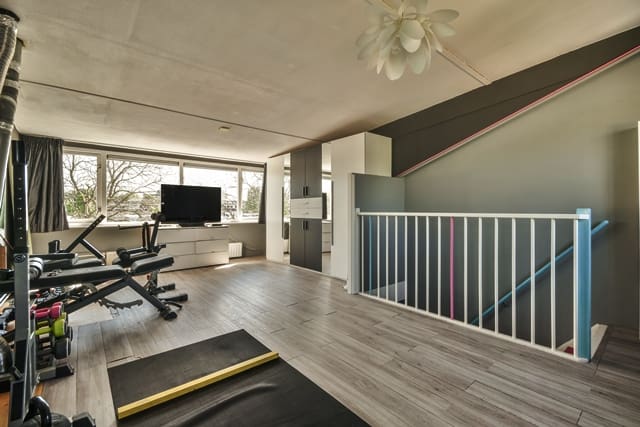
Certain features can make a home gym feel substantially more desirable without requiring an extravagant investment. Durable flooring, mirrors, adequate electrical outlets, bright lighting, ventilation, and sufficient storage can all contribute to a more functional workout environment. Natural light can also make an exercise room feel more inviting and less like an afterthought tucked into a basement or spare room. Built-in storage can help keep weights, resistance bands, yoga equipment, and other accessories organized while maintaining a clean appearance. When these features complement the home’s overall design, agents can highlight the space as a polished lifestyle amenity rather than simply another room containing fitness equipment.
When a Home Gym Could Hurt Resale Appeal
A home gym can become a disadvantage when it consumes valuable space, requires extensive remodeling, or appears impossible to repurpose. Highly customized installations, permanent equipment, elaborate sound systems, or unusual flooring may appeal strongly to one buyer while discouraging another. Buyers may also question the cost and effort involved in converting the space back into a bedroom, office, or living area. This is especially relevant in markets where buyers place a premium on bedroom count and flexible living space. Agents should therefore evaluate the home gym within the context of local buyer preferences rather than assuming every fitness-oriented improvement adds resale value.
How Agents Can Position Home Gyms for Maximum Appeal
Real estate agents can turn a home gym into a marketing advantage by focusing on flexibility, condition, and lifestyle benefits. Instead of presenting the space solely as an exercise room, agents can describe its potential as a wellness room, fitness studio, hobby area, or flexible bonus space when appropriate. Decluttering and staging should make the room feel spacious enough for buyers to imagine their own equipment and routines. If the property includes other desirable features such as a finished basement, upgraded flooring, smart-home technology, or additional storage, the gym can be presented as part of a larger lifestyle package. This approach allows agents to attract fitness-minded buyers without alienating buyers who have entirely different plans for the space.
Home Gyms and Long-Term Resale Strategy
Homeowners considering a home gym should think beyond their immediate fitness goals and consider how the improvement may affect future buyers. Spending heavily on specialized features does not necessarily produce the same return as improvements that benefit nearly every homeowner. Agents can help sellers understand that versatile upgrades often have broader market appeal than highly personalized renovations. A home gym can be an excellent feature when it uses existing space efficiently and can easily transition to another purpose later. Ultimately, the strongest resale strategy is to create a room that feels useful today while remaining adaptable enough to meet tomorrow’s buyer expectations.
Conclusion
Home gyms can influence resale value and buyer interest, but their impact depends heavily on design, location within the home, condition, and flexibility. For real estate agents, the key is to understand that lifestyle amenities can generate emotional appeal without necessarily translating into a direct increase in appraised value. A clean, attractive, versatile fitness area can help a listing stand out and provide compelling marketing content in a competitive market. Conversely, a highly specialized or cluttered gym may cause buyers to focus on the cost of converting the space rather than its benefits. By presenting home gyms as flexible lifestyle spaces and emphasizing their practical features, agents can help sellers maximize the marketing potential of this increasingly popular home amenity.
#RealEstate #HomeGyms #HomeValue #ResaleValue #RealEstateMarketing #RealEstateAgents #HomeSelling #HomeStaging #RealEstateTrends #PropertyValue
